Wednesday, December 15, 2021

   Becalmed

 We find ourselves becalmed now in a sea of doubt. If we are to study evil, we must tackle some headwinds in our pursuit of its actual nature.

The first item we find floating past is the concept of context. Anyone who has dealt with modern religious aficionados knows that this is a common defense of doctrinal contradictions. The “taken out of context” explanation ranks only second to the “his ways ain’t our ways” dodge.

Some modern “theologians” would no doubt find themselves unable to speak if forbidden the use of the phrase “out of context.”

An anecdotal story from my own life can set the stage for an explanation of how tricky the concept of context becomes when applied to real-life situations.

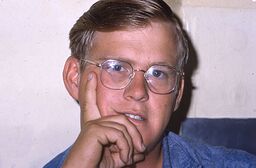
Someone who was very dear to me was taken from a rural life on an Arkansas farm in the mid-1940s and mustered into the United States Army to go and fight the Axis powers in Europe. There, he survived unspeakable horrors before his side won. He would speak of artillery attacks in which he, “would want to live one second longer, just one second.” He also told of a stray shell, listlessly fired by Germans during the last days of the war, taking off the head of “the shortest man standing in line for chow.”

The Army disbanded his division, the 79th Infantry, after VE day and he moved to the First Infantry Division.

Yes, that First Infantry Division: The Big Red One.

Remember that the U.S. was still at war with Japan at that time, and that country’s leaders had vowed resistance to an invasion by every man, woman, and child in the country, using every cannon, gun, plane, knife, sword, implement, stone, and stick available. Not a pleasant scenario for a member of a unit renowned for being assigned to “the first wave.”

When evil prevents evil, is evil sanctified by context? Was the vaporizing of hundreds of thousands of innocent civilians through the first use of nuclear weapons—an evil end that eliminated further resistance and obviated the end of plans for further military invasions—justified?[i]

We will be debating that question when the remaining homo sapiens take their last breaths, sigh and say, “Look what our hands have wrought.”

Spoiler alert: The man in question survived the war and occupation, returned home, married, and helped produce a beautiful daughter to whom I am still married after 49 years.

It gets murkier, not the story but the consideration of context.

We drift along and encounter some complicated concepts. They are far beyond the scope of this amateur analysis but deserve mentioning.

The first is one currently in play with regard to the idea of sexual orientation. We shouldn’t tack anywhere near that emotional squall, or must we? We’ll see.

The concept is one called “social constructionism.” This is a theory stating that characteristics typically thought to be immutable and solely biological—such as gender, race, class, ability, and sexuality—are products of human definition and interpretation.[ii]

It only requires a look at how the female of our species fares in an historical context to see the ideas creating social construction as a valid concept. In early creation myths, woman is sometimes simply a catalyst for the development of man.[iii] Later, she becomes property, the earliest forms of marriage simply being a contract by which a man protected his harem from theft or, uh, invasion.[iv] In some later societies, woman enjoyed the simple definition of a thing possessing ovaries. We follow a tortuous path of supporting roles to modern times wherein, as a social construction, we create “categories based on certain bodily features; we attach meanings to these categories, and then we place people into the categories by considering their bodies or bodily aspects.”[v]

Let us steer from the dangerous shoals and drop in on the Wannsee Conference outside Berlin on January 20. 1942. There, with the aid of a translator no doubt, we hear high-ranking Nazi officials determining what some historians call “the final solution,” i.e. which innocent humans deserved to be slaughtered by the regime and how. We hear them deciding if a person’s “Jewishness” (a major standard for extermination) relied on a fractional portion of racial “blood” or perhaps whether an individual considered herself, himself, or, one supposes, their children, Jews. What is particularly terrifying is that their production goal (11 million) relied on countries which they hadn’t yet conquered but would get to as soon as they finished with Russia.

Those decisions were social constructs, not fact-based. The evil was not that the victims were Jews. The evil was that the Nazis slaughtered six million of them. Perhaps (almost) all of us can agree that this was not an act perpetuated by “some fine people."

Ahh. A breeze. Let us sail away from this dreadful spot.


[i] See: Hersey, J. (1946). Hiroshima. New York: A.A. Knopf.

[ii] Saraswati, A. P. L. A., Shaw, A. P. B., & Rellihan, H. (2017). Introduction to women’s, gender, and sexuality studies. Oxford University Press.

[iii] Genisis: 2:4-25 NIV

[iv] Durant, Will, and Ariel Durant. The Story of Civilization. New York: Simon and Schuster, 1935.

[v] Saraswati, et al, op cit

Tuesday, December 14, 2021

  Traversing the Narrows

 In seeking a temporary working definition of evil, let us first say that it is an act of humankind, to be distinguished from the mysterious workings of a spirit, a phenomenon, or a god. As an act, it must be planned and enacted by a person or persons. As an act, it must be planned and executed against a person or persons. As an act, it must deprive a person or persons of the ability to continue life in a state of well-being, safety, and opportunity. Finally, as an act, it must involve intent.

Accepting these for the present, questions arise immediately. If we accept the fact that evil thrives from the actions of a prime agent, say an Adolph Hitler, are there attendant gradations?

Are those who support the actions of the prime agent themselves the doers of evil? This becomes cloudy if the support falls within the acts of nationalism. It can lead to what we might call the Nuremburg Defense.” As mentioned earlier Adolph Eichmann used it later after being captured by Israeli agents and put on trial in Jerusalem for his role in the murder of millions of Jews and other innocents. As a primary functionary in the Holocaust, he claimed that he was “only following orders.” His performance during the trial prompted writer Hannah Eichmann to observe:

“The trouble with Eichmann was precisely that so many were like him, and that the many were neither perverted nor sadistic, that they were, and still are, terribly and terrifyingly normal. From the viewpoint of our legal institutions and of our moral standards of judgment, this normality was much more terrifying than all the atrocities put together.”[i]

Are seemingly normal people who are drawn into evil acts under the spell of a charismatic leader guilty of the evil acts resulting from the following of orders? This question becomes a complex one when we consider orders that aren’t given directly. Instead, they may be implanted by nefarious sources and strengthened by repetition until the irrational among us assume that they are called to an almost divine directive. The resulting rampaging mob may not represent “some fine people” but it does contain, among its throbbing mass, some who we had once considered “terribly and terrifyingly normal.”

Speaking of following orders, at least one religious figurehead ordained that we do not judge others in order that we, ourselves, might not be judged.[ii] If we are to understand the nature of evil at all, however, we must resolve the question of “moral obedience,” a possible one-time act that resulted from achieving a stated end. Standing in opposition to this is the Kantian concept of “moral imperative,” or conduct that is absolute and not dependent upon any desire or end.[iii] Further, though not widely researched, evidence exists that German soldiers who refused a part in the murder of the innocents were not punished but simply reassigned.[iv]

There, at the end of the day’s cruise, we must, I think, abandon the obedience, or Nuremburg, defense. The ashes of the innocent that still cover the fields of Europe demand it of us.


[i] Arendt, Hannah, op cit

[ii] Matthew 7:1 NIV

[iii] Kant, I., & Beck, L. W. (1956). Critique of practical reason. New York: Liberal Arts Press.

[iv] Goldhagen, D. J. (1996). Hitler's willing executioners: Ordinary Germans and the Holocaust. New York: Knopf.


Monday, December 13, 2021

A Study of Evil

 FROM MYTH TO REALITY

 Now it becomes even more complicated. We can no longer attribute the uncomfortable or disturbing to myth or to the “works in mysterious ways” explanation. We now have actual figures from history burning opponents alive, pouring liquid metal down the throats of prisoners, lowering followers of different religious sects onto sharpened stakes, or hanging children for petty crimes. We look for origins, sadly I might add.

 T.S. Eliot began his classic poem The Waste Land[i], with simple lines since borrowed by every cub reporter who has had the chance to write an editorial about springtime:

April is the cruellest month …

None bother to quote it with the next few lines.

“April is the cruellest month, breeding

Lilacs out of the dead land, mixing

Memory and desire, stirring

Dull roots with spring rain.

Winter kept us warm, covering

Earth in forgetful snow, feeding

A little life with dried tubers.”

So what do we have here?

While offering no claim to be a scholar worthy of analyzing Eliot, I did take the time once to follow the references that he offered to understanding his poem. This led to a reading of the (abridged version) of Sir James George Frazier’s monumental work The Golden Bough, A Study in Magic and Religion.[ii] That work offers an interesting tack into the trade winds of history.

Frazier recounts how, in humankind’s quest for explanations of the world, it shifted from magic to religion and, ultimately to science. Of magic, he found two forms, one an imitative (replication the sounds of thunder, for example) and one based on a sympathetic relationship between causes, i.e. religion. He eventually discounts each as a false, “association of ideas” and credits science with the best avenue for dealing with uncertainties. Of course magic and science did not fail to intermix, as in the case of alchemy for example.

Enough of that. What interests us here are the sections in which Frazier deals with the fear that primitive societies held that the world each fall and winter, requiring specific actions for a rebirth in the spring.

What could be a greater manifestation of sympathetic magic than the sacrificing of strong and/or beautiful victims in order to restore the vitality of the Earth?

Who among us, though, could now doubt the evil in an act of leading a beautiful young virgin, or the tribe’s strongest young male, to an alter to be sacrificed, sometimes horribly, in order that the tribe might bring forth sustenance for the community during the coming year? Of course if youth and beauty were in short supply, as well as virgins, the burning of a man, say a stranger, might suffice.

Yes, for some April was indeed the cruelest month in light of the vegetation rituals that became, according to Frazier, pervasive throughout the planet.

Associated with all this is a companion belief that the well-being of a tribe, nation, or society is equivalent to the vitality of its king, or leader. Thus, we get odd, and some might say evil, practices in some societies by which the aging king rules until a younger one murders him. In fact, Frazier begins his lengthy work with a description of such a practice in ancient Greece. The passage bears repeating:

“In antiquity this sylvan landscape was the scene of a strange and recurring tragedy. On the northern shore of the lake . . . stood the sacred grove and sanctuary of Diana Nemorensis, or Diana of the Wood [fertility goddess of Classical Roman tradition] . . . . [in] this sacred grove there grew a certain tree round which at any time of day, and probably far into the night, a grim figure might be seen to prowl. In his hand he carried a drawn sword, and he kept peering warily about him as if at every instant he expected to be set upon by an enemy. He was a priest and a murderer; and the man for whom he looked was sooner or later to murder him and hold the priesthood in his stead. Such was the rule of the sanctuary. A candidate for the priesthood could only succeed to office by slaying the priest, and having slain him, he retained office till he was himself slain by a stronger or craftier . . . The post which he held by this precarious tenure carried with it the title of king [King of the Wood–Rex Nemorensis]; but surely no crowned head ever lay uneasier, or was visited by more evil dreams, than his.”[iii]

Here we find a reference to  Shakespeare’s’ “Uneasy lies the head that wears a crown.”[iv]

It would appear then that some of the earliest introductions to evil themes centered on the gaining of great power, either that offered by nature or that offered by society.

How did that shift into such a common practice, a practice instigated by one individual against another, sometimes for no apparent gain?

Mind the helm.


[i] Eliot, T. S. (2001). The Waste Land (M. North, Ed.). WW Norton.

[ii] Frazer, J. G. (1923). The Golden Bough: A study in magic and religion. Abridged ed. London: Macmillan.

[iii] Frazier, op. cit. Chapter One.

[iv] Henry IV, Part 2.


Saturday, December 11, 2021

 I.                DISTANT DRUMS

Having hoisted anchor and set a course, let us consider some of the earliest manifestations of evil, or how we might contemplate it at this stage of our journey. In order to keep the search confined to familiar waters, we limit our search to western thought. Fair warning, some accounts may include references to concepts that we no longer call evil. Concomitantly, we shall find some practices considered normal by our ancient ancestors, and their gods, that we find abhorrent, if not purely evil, in our modern lives.

Early accounts emerge from literature, not history. Possibly, the earliest literary source of evil resides in the Babylonian creation myth called the Enuma Elish. It is a story ranging from classic conflicts of “hatred, envy, envy, fear, and murderous rage, to grandchildren getting on their grandparents’ nerves enough to generate murderous intent.[i]

In other words. The Universe itself is a breeding ground for evil.

Moving forward to a more familiar current, we come to the account of creation in the first chapter of the Hebrew Bible. In contrast to the percolating discord of other creation myths, the Genesis account is smooth and swift. All is good, pleasant, and harmonious. Some modern adjunct contributors to the scriptures even avow that dinosaurs were gentle vegetarians, somewhat akin to pets, during that era.[ii] At any rate, all was calm. All was bright.

Until.

It seems that the potential for evil lay not-very-well hidden in the Garden of Eden. All it took to release its cosmic destruction was a simple act of disobedience occasioned by a sweet talker passing through the garden.

And, as Dr. Bart Ehrman points out, disobedience weighed heavily on the mind of the Hebrew creator of the world.[iii] In fact, much, if not most, of the Old Testament finds disobedience, and the punishment for it, a central and dominating theme. As for the requisite punishment, the creator doesn’t rely on “time outs” or withholding of privileges for a short time. No, he isn’t above stoning an entire family—man, woman, children, and animals—because the father disobeys an order.[iv] Nations can find themselves exiled into bondage and slavery for recalcitrance.

Here we fact a mental squall that will threaten us for our entire journey: Is disobedience, or the chosen method of retribution for disobedience, the true evil?

In summary, the earliest entrances of evil give birth to some interesting questions.

Is succumbing to an implanted and appealing temptation evil? In modern times, we might call that entrapment.

Is disobedience of proper directives an evil in itself?

Is non-disobedience of proper directives an evil itself? (See: Adoph Eichman.) Veterans of the Mexican, Spanish, Vietnam, and Iraq wars would find this particularly interesting.

At what point does “sin” become an evil? Are there moral gradations and tipping points?

Are individuals to be punished for the sins of a nation or cult?

Can history cleanse an ancient evil, such as the eating of pork or shellfish as well as the ridiculing of a bald man?[v]

Can history darken an allowed and ancient practice such as polygamy or slavery and reclassify it as evil?

We now find ourselves sailing into troubled waters indeed. Best gird with a lifeline. Meanwhile, all is peace and harmony in the Garden of Eden.


[i] Casey, Bary, Evil: Ancient and Modern Spectrum, May 1, 2018

[ii] From the so-called “Creation Museum, Petersburg, Kentucky

[iii] Ehrman, Bart D. God's Problem : How the Bible Fails to Answer Our Most Important Question--Why We Suffer. Harper Collins, 2009

[iv] See Joshua 7. Other scripters in the Old Testament decry this treatment, creating one of many contradictions therein.

[v] 2 Kings 2:23–24

Friday, December 10, 2021

A Study of Evil

 TIGHTENING THE RIGGING

 As we sail into troublesome philosophical waters, a precursory look at the essence of evil leads to a precursory finding: Nobody agrees. Not only that, we find diametrically opposed beliefs as to the very foundations of evil. We read of witnesses at the Nuremburg trials recount how Nazi guards threw live babies and children into a fiery pit in order to save on gas or bullets.

“That’s evil,” we say. “That’s an evil act if there ever was one.”

Then we close our eyes and hear the sound of water-soaked bodies—babies, children, adults, and animals—thudding into the hull of the ark in which Noah and his family ride out the flood.

Where is the tipping point between “I know evil when I see it,” and “His ways ain’t our ways?”

Can we depend upon our numerologist friends? Is evil quantifiable? We read of Joseph Stalin overseeing the execution on nearly 800,000 of his countrymen (not including deaths attributable to imprisonment, starvation, disappearance, etc.) during his reign, under his “no man, no problem,” view of leadership.

“That oughta do it,” we might think.

But wait. What about the character in the Charlie Chaplin film, Monsieur Verdoux? His most famous line stops us in our numerical tracks. Henri says, “Wars, conflict - it's all business. One murder makes a villain; millions, a hero. Numbers sanctify, my good fellow!”

Years later, Bob Dylan voiced a similar thought in one of his classics when he observed,

“Steal a little and they throw you in jail.

Steal a lot and they make you king.[i]

Let us forget numbers as well as stature. As the Galilean himself observed, “Whatever you did for one of the least of these brothers and sisters of mine, you did for me."[ii]

Would we be safe, then, in stating that evil, however we choose to define it, can be a phenomenon exerted upon an individual, a group, a sect, a nation, or an entire planet?

Good. Let us trim our rigging and sail on in our quest.


[i] What’s a Sweetheart Like You Doing in a Place Like This? ©Universal Tunes

[ii] Matthew 25:40, 45, NIV

Thursday, December 9, 2021

A STUDY OF EVIL

In addressing the subject of evil, the first sign of danger is the instability encountered in finding a definition, or a safe taxological harbor in which to drop anchor. Some even describe evil as simply the absence of good. Some classify it as a supernatural force over which the individual may have, according to creeds and shibboleths, a limited or even definable degree of control. Some go further and talk of “pure evil,” for which there exists the acronym BFE.[i] Thus we find individuals from comedians to supreme court justices (at the risk of repeating myself) who blame civilization’s miseries on dark forces: Beelzebub, Satan, the Dark One, or a society’s demon du jour.

Others don’t accept BFE and its reliance on extraordinary, or even paranormal, forces. They assign it to ordinary, if certainly complex, psychological causes. Hannah Arendt, in her work Eichmann in Jerusalem, even used the word “banal” to describe a subject on trial for his part in effectuating one of the most monstrous events in human history. From all accounts, Adolph Eichmann played the part well during his trial.

If intended, it didn’t work. Nonetheless, the “I was only following orders,” explanation for evil acts deserves its own library so we shall damn it with scant attention herein.

In rejecting the BFE thesis, we are left to pursue what Piercardo Valdosco described as persons exhibiting evil as “a product solely of their essence, their soul, as opposed to a more complicated combination of environmental and individual forces.”[ii]

Hence comes the first limitation in my admittedly amateurish look at the subject of evil. We shall analyze it in detail, but the emphasis, the final denouement so to speak, will be the multi-faceted look at how ordinary and decent people commit evil deeds, aid and abet evil deeds, countenance evil deeds, or simply approve evil deeds with silence.

In a personal and anecdotal sense, I’m aiming to find some explanation for the fact that we find former upstanding members of society now openly supporting a movement populated by neo-Nazis, the Klu Klux Klan, the situationally ethical, racial, social, and sexual bigots, and those who espouse the killing of other Americans for less than heinous activities of which they don’t approve. It won’t be an easy journey. Fasten your seat belts.

Adolph Eichmann
Banal, Oder Nicht Banal? 


[i] Valdesco, Piercarlo, “The psychological Power of Satan.” Scientific American Sepemeber 29,2013

[ii] Piercalo, op cit

Wednesday, December 8, 2021

Understanding

 Suffering. That’s an easy subject to be stuck on in our time. I started reading God's Problem: How the Bible Fails to Answer Our Most Important Question — Why We Suffer. By Bart D. Ehrman. Maybe the fifth or so of his books I’ve read. In beginning the discussion, he rightly asks, “How can we discuss suffering without first discussing the Holocaust?”

Then he describes a specific horror about that moment in history, a time in which some 11 million people were murdered because of their race, religion, politics, physical or mental conditions, and other myriad phenomena considered evil by the Nazi regime.

I may have read of this, and perhaps subjugated its primal horror to that secret place I hide things that threaten my sanity. At any rate, I’ve lost the ability to be surprised by the accounts of a nation’s actions. It seems that when the Nazi concentration camps encountered logjams in disposing of families considered unfit, they would bypass the normal execution process and begin throwing live children and babies into pits of fire while still alive, leaving the parents with the soothing anesthesia of gas or a bullet. Survivors testified at Nuremburg that a person could hear the screams of children all over the camps.

I stopped in my reading and considered the fact that I now have acquaintances whom I once considered decent and ordinary people who, from all accounts, would vote for Adolph Hitler risen from the grave if he would only promise to get rid of abortions, abortions for any reason under any circumstances and regulated only by the decision of a small group zealots who think America should be ruled in accordance with certain of the Hebrew religion’s ancient texts.

Am I the only one who sees the ironic symbiosis here? Am I the only one troubled by the act of a sitting president of the United States of America, a figure now worshipped by more than a third of our voting population—the titular head of a once noble political party—who has described the modern members of the Nazi regime as “some fine people?” Am I the only one who thinks we are staring into the abyss as a nation? Am I the only one who has decided to attempt an understanding ere they get done with the priority groups and come for me?

I’m embarking on a study of evil. I’ll keep you posted on the results of my journey.